
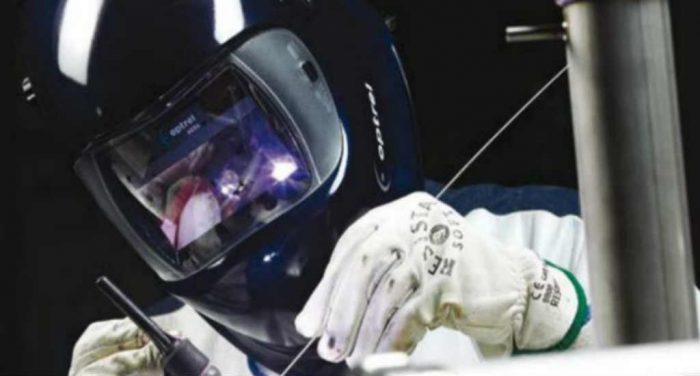
Sperian’s Galaxy high impact welding helmet now with hard hat adaptor
SPERIAN has launched the Galaxy high impact welding helmet with a hard hat adaptor.
According to Sperian, its Galaxy high impact welding helmet is currently the only passive flip front, high impact approved welding helmet on the market. It is tested to Australian Standards, and approved by SAI Global.
The Galaxy welding helmet is now fitted with a hard hat adaptor to suit PA620V and MSA V-Guard Elite hard hats.
Also available as a spare part, users can quickly convert their standard Galaxy high impact welding helmets to be used with a hard hat.
This provides protection for the head without needing to switch helmets and hardhats. The Galaxy high impact welding helmet with hard hat adaptor can be used at construction sites.
Welders using the Galaxy high impact welding helmet with hard hat adaptor can change the distance from the Auto Darkening Filter (ADF) to the eye, and the angle of the welding helmet to the hard hat to suit to their personal needs and working environment.