
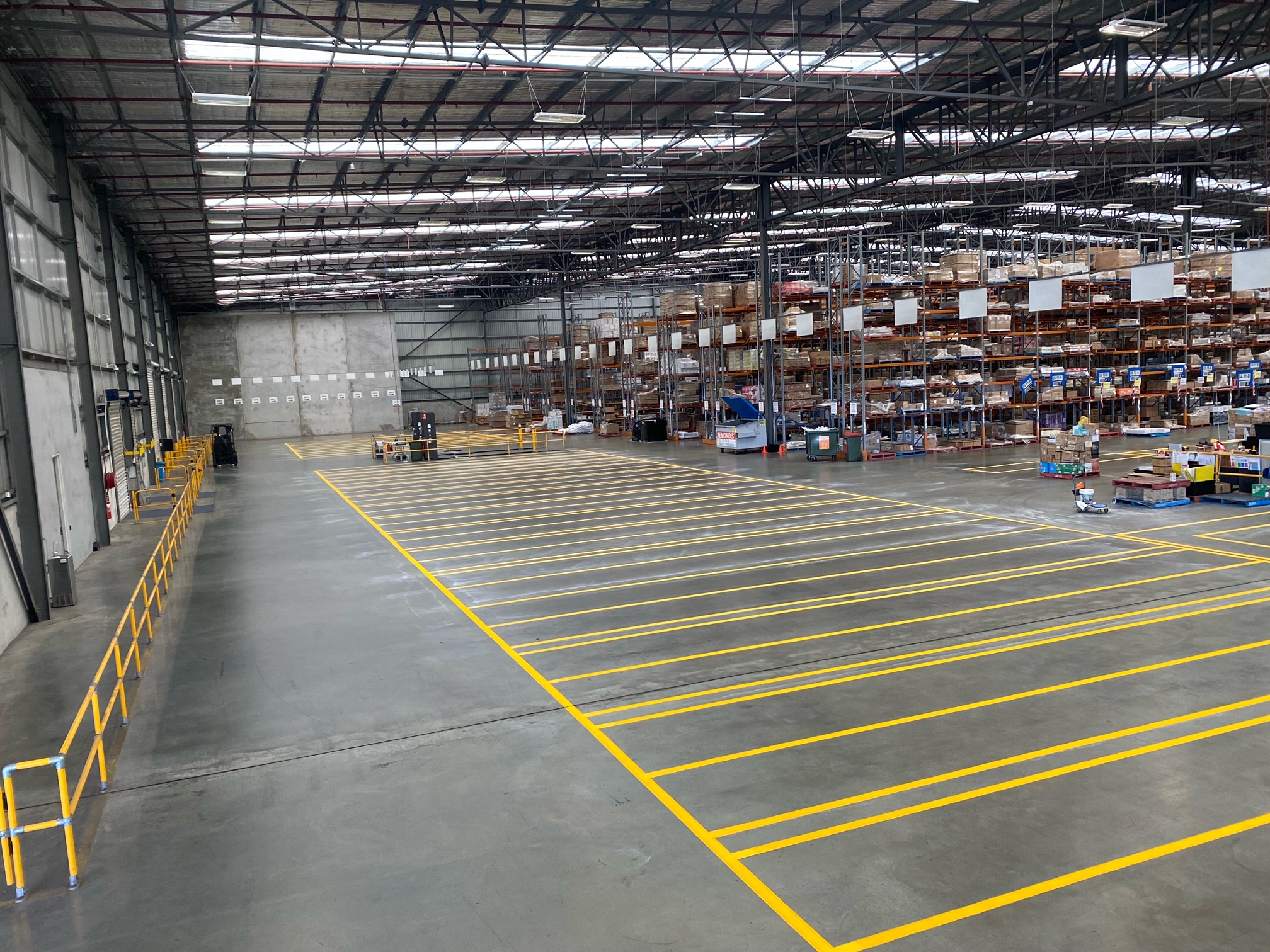
Warehouse line marking: safety and efficiency
When you’re designing or renovating a warehouse, floor marking might seem like an afterthought compared to structural stuff and equipment placement.
But to be honest proper line marking can literally make or break your warehouse operations and that’s something the experts have seen a lot of at Delineation Line Marking.
Poor floor marking can cause accidents and slow down workflow. Most people think warehouse line marking is just about painting some yellow lines and calling it done.
But its a lot more to think about than that. You need to think about safety regulations and how many people will be walking over the area and how your workflow functions. You need to think about heavy machinery that will go over it and how much general foot traffic is there going to be.
Why warehouse line marking matters more than you think
A warehouse without proper line marking is an accident waiting to happen. Warehouses are full of chaos and are prone to accidents.
Think about how much is going on inside a warehouse, line markings help protect your workers and also your business if something was to go wrong. You have heavy machinery like forklifts mixing with people and loading zones. It’s a recipe for disaster.
Safety is a huge reason for needing safely marked lines and areas but you also need to think about efficiency. If your floor of the warehouse clearly shows where people should walks and move around and clearly where they should avoid, it makes it a lot easier for people to avoid injury and accidents.
Workers know where to go, drivers know where to drive and everyones more just productive.
Then there’s the compliance stuff. WorkSafe regulations require clear marking for pedestrian walkways vehicle routes and dangerous areas. If you end up getting this wrong you’re looking at fines that’ll hurt and not to mention any liability cases.
Different zones need different approaches
Not all warehouse areas are created equal obviously. Loading docks have different requirements to storage areas which are different again to picking zones.
Loading areas need heavy duty materials to make their markings last with all the heavy traffic they will get.
Storage zones need clear isle markings that help with managing inventory and also safety too. These areas need different storage heights and equipment turning stuff.
Nothing worse then marking aisles that look good on paper but dont actually work when youve got a forklift trying to get through them.
Picking areas often need more detailed marking because your dealing with both pedestrian traffic and smaller equipment like pallet jacks. The markings need to be accurate enough to maximise workflow but visible enough to maintain safety standards. Which is always good.
Planning your marking layout
This is where the building design makes a real difference. Line marking needs to work with the overall warehouse design from the start not be added as your work continues.
Start with your main traffic flows. How do trucks enter and exit? Where do they load and unload? How do forklifts move between storage areas and loading docks? These main areas need the heaviest duty markings and the clearest definition.
Then think about pedestrian safety. Workers need safe paths between different work areas that dont conflict with vehicle traffic. These walkways should be clearly marked and physically separated where possible.
Storage areas need marking that helps with inventory management. Clearly sorted spaces for different product types picking routes that cut down travel time and staging areas for incoming and outgoing goods.
Colour coding that makes sense
Marking lines in your warehouse works best if you follow a pattern and stick to it. New workers who come to work at the warehouse will be abel to follow them easier than if you pick pink and purple for your safety marking.
Yellow normally means caution areas around machinery loading docks or areas where trucks and workers may come into contact. Red is for fire safety equipment emergency exits and dangerous areas where people shouldnt normally go.
White or blue is used for standard traffic lanes and work areas. Green normally means first aid equipment or safety shower locations. Black is sometimes used for quality control areas or inspection zones.
The best plan of attack is to set out your choices as the beginning and stick with your hcoices throughout everywhere. Mixed colours give workers and people mixed messages and can lead to accidents and injury.
Working with professionals
Warehouse line marking isnt typically a DIY project. You need quality materials like align with safety standards. You also need to comply with all safety regulations and make sure you’re using the right material for the type of warehouse you have.
Professional line marking contractors who understand warehouse environments can help you work out the layout of your markings and that you are following the guidelines. They know which materials work best for different applications and understand the compliance requirements. At least the good ones do.
Good contractors will also work with your warehouse management team to understand specific operational needs. Cookie cutter solutions rarely work well in industrial environments where every warehouse needs different things.