Loading…

Metal Worker

Home & Commercial Construction Advice

Tussle over blacksmith heritage

BLACKSMITHS in Eveleigh, Sydney, are campaigning against the State Government’s move to evict them from their workshop.
For the past 17 years, Wrought Artworks has had free use of the furnace workshop in Bay Two of the Australian Technology Park.
Using ancient blacksmith techniques, metal is melted in a furnace and banged into shape by a steam-powered hammer.
The Redfern-Waterloo Authority is demanding the company pay to use the workshop because it is a commercial business. It says it simply wants a tenant which pays the rent.
According to the company, it had an agreement to run rent-free in exchange for keeping the heritage equipment maintained. It fears the government will demolish the site and turn it into an office building
The authorities say the heritage status of the site will be preserved if the company is evicted. Activists say heritage is about more than building and machinery.
85-year-old ex-machinist Bob Rhymes worked at the site for 30 years, starting in 1950. According to him, heritage is also about the memory of the men who worked there. Many died of industry-related disease, and keeping the machines working is a way of keeping the memories alive.
The workshop will be running an open day on 17 August 2008.
Steel Design

State Australian Steel Design Awards winners announced

THE WINNERS of the Australian Steel Design Awards for Victoria and Tasmania were announced on 25 July 2008 at the Crown Palladium.
The awards aim at highlighting the standard of design and execution achievable with the aesthetics of steel and the Australian industry’s capabilities and efficiencies. The state awards were presented in seven categories.
The Steel Fabricators Award was won by Structural Challenge for their entry on the new Nigel Peck Centre for Learning, while the PlanIT Design Group got the Steel Detailers Award for their Melbourne Convention Centre redevelopment.
The Architectural Steel Design Award for a Large Project went to Cox Architects & Planners’ entry on the National Institute of Circus Arts building, while the Small Project category was won by Studio D’Ambrosio for their Under the Moonlight House at Mount Hotham.
The Structural Engineering Steel Design award was given to the Connell Wagner submission for Stage Two of the Melbourne Sports and Aquatic Centre.
The Metal Building Product Design Award was won by Suters Prior Cheney Architect’s Boroondara Sports Complex.
The awards are part of the first-ever national steel awards program held by the Australian Steel Institute (ASI). Results of the national program will be announced in September.

National Engineering

National Engineering director retires

THE MANAGING director of structural steel fabricator National Engineering is retiring at the end of August.
Dave Williams will be handing over his role to Norm Chapman so he can enjoy life cruising, shooting and golfing.
According to Williams, the structural steel industry was experiencing difficult times with rocketing steel prices, shortages and a lack of major projects because of the poor building market. The financial difficulty has been made worse by the American sub prime lending crisis.
He also says National Engineering’s plans to relocate to a new site in Burrangong have been effectively finalised, and are now subject to planning approval and rezoning.

molten metal

Boffins apply steel concepts to planetary model

THE STEELMAKING process could be the key to unlocking the secrets of the planets, according to researchers at Swinburne University of Technology.

Professor Geoff Brooks, Dr Sarah Maddison and Vianney Taquet are collaborating to use mathematical models from steelmaking to determine what compounds form during the initial stages of planet development.
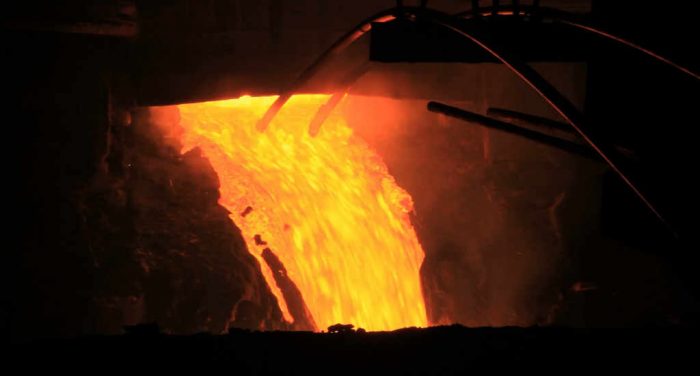
According to the researchers, the science behind steelmaking is comparable to the process of planet formation. Steelmaking furnaces often contain molten metal with a layer of crust on top. Similarly, the centre of the Earth is made of molten metal, with an outer crust.
The university researchers are also taking know-how from the steel makers. For example, the industry has models that show how extremely high temperatures can determine the grade of steel that is produced.
An adapted process allows scientists to work backwards from a piece of metal to indicate the temperatures and processes which it has undergone. This could help in the analysis of meteorites.
Seamless tube plant

Seamless tube plant to be located in Gladstone

BOULDER Steel will be locating its expanded seamless tube plant in Gladstone, Queensland.
Dubbed the “Australian Project”, the facility was initially slated to be located at Ipswitch. Following a widening of the scope of the project, a new location was needed.
According to the metal working company, the new site is close to the port, gas, power and rail infrastructures.
The project was expanded after planners added a pig iron plant to the projected facility. This plant would ensure the quality of the steel to be produced and reduce production costs.
The seamless tube plant will produce 400,000 tonnes of seamless tubes per year, and will take advantage of the growing global market and the lack of competition in Australia. Construction will start in 2008, and full capacity is expected by 2011.

Architectural Steel Design

State entrants to first national steel awards announced

THE AUSTRALIAN Steel Institute (ASI) has announced the NSW and ACT State winners of a number of industry awards, in a lead up to Australia’s first national steel awards.
Four categories were awarded, in Architectural Steel Design, Structural Engineering Design, Metal Building Product Design and Multi-Level Building Design. The winners of the first three categories will be competing for the national awards which will be announced in September.
Kingston Building’s entry on St. John the Baptist Catholic Church building in Woy Woy won the Architectural Steel Design category.
The Structural Engineering Design category was won by Arup’s entry for the Allianz Centre redevelopment at 2 Market Street in Sydney’s CBD.
Brookfield Multiplex’s submission on the Latitude East building development at World Square in Goulburn Street, Sydney topped the Multi-Level Steel Building category.
The RAAF Liquid Oxygen Extraction (LOX) facility in Richmond won in the Metal Building Product Design category.
According to the awards organisers, these accolades highlight the standard of design and execution possible with steel.

Stainless steel fabrication

Stainless steel fabrication to avoid corrosion workshop

THE Australian Stainless Steel Development Association (ASSDA) is running a workshop on fabricating stainless steel to avoid corrosion.
According to the association, understanding corrosion and how to control it is a critical part of steel fabrication. Although most metal fabricators are aware of the rules for satisfactory construction, fabrication details are often missing.
The organisers claim the interactive workshop will provide the tools and knowledge for fabricators to avoid common mistakes to do with corrosion. It will include real examples and hands on demonstrations.
The workshop is designed around the examination of corrosion resistance and corrosion mechanisms that can frequently affect stainless steel.
It will address various topics such as the definition of corrosion, the methods by which stainless steel resists corrosion, common stainless steel corrosion mechanisms, and fabrication techniques to prevent corrosion.
The workshop will run in various cities in June, and will cost $165 for non-ASSDA members.

steel industry safety

Entries open for steel industry safety award

THE Australian Steel Institute (ASI) has opened entries for its National Occupational Health and Safety Excellence Award 2008.
The award is open to members across the Australian steel industry. Nominations for individuals up to big industry players can be entered.
According to the award organisers, it is an initiative from the ASI to recognise steel industry companies and individuals for high achievements in health and safety, regardless of size.
The awards are offered in the three categories if Site, Individual and Improvement Initiative. The winners will be presented at the Australian Steel Convention during September 2008 in Perth.
The organisers claim entry requirements are straight forward, requiring submissions to be below four pages long. Most steel related businesses that record Lost Time due to Injury incidents should be eligible to enter. The entries must identify the site, factory or department of the company involved in steel manufacture, steel processing, distribution or fabrication and demonstrate a strong commitment to improving health and safety.
Site Award submissions must include LTI performance records for the past three years to June 2007, lead indicator performance information, and a brief explanation of what the business has done to improve its health and safety performance in that period.
Individual Award submission must describe why the nominated person should be considered for the award and list the contributions of the individual over recent years.
Improvement Initiative Award entries must describe the initiative and why it should be considered for recognition, list the process undertaken, the people involved and the deliverables of the initiative.

aerospace wings

Waterjet system for aerospace wings

MITSUBISHI Heavy Industries has purchased a waterjet system from Flow International to cut wing skins for commercial jet aircraft.

The multi-million dollar contract between the two companies will see Flow supplying a Composite Machining Centre (CMC) waterjet machining system 36m long and 6.5m wide. The system will be used to cut composite wing skins for aircraft wings.

The CMC waterjet system is expected to use ultrahigh-pressure pumps to generate a fine stream of water moving at three times the speed of sound and using 3.7l per minute.

According to the company, waterjet is superior to conventional cutting tools such as diamond or carbide-tipped routers, bandsaws, cutoff saws and abrasive wheels. Traditional cutting methods leave frayed or delaminated edges, or damage the composite materials by overheating.

Abrasive waterjets cut by erosive action rather than friction and shearing. The water flow draws in a stream of fine garnet particles that slice into the surface to produce an edge free of frayed or delaminated areas.

Waterjets have low operating temperature, and exert less lateral force on the material than conventional machines.

metal distribution

New metal distribution company

BLUESCOPE Steel has created a BlueScope Distribution business to simplify metals sourcing for Australia’s industry.
The new distributing company has a national network of more than 50 processing and distribution sites and has the resources and knowledge of the former Metals and Regional Distribution arm of Smorgon Steel.
The company provides steel plate, sheet, coil, reinforcing fabric, bar and building products, merchant bar, structural steel, tubular, engineering steel and aluminium products.
It also offers processing services from simple length based cutting of bar and tube products, to complex multiple precision processing via computer numerical controlled installations.
BlueScope Steel supplies metallic coated and painted steel products for the building sector. It produces flat steel products, including slab, hot rolled coil, cold rolled coil and plate.